
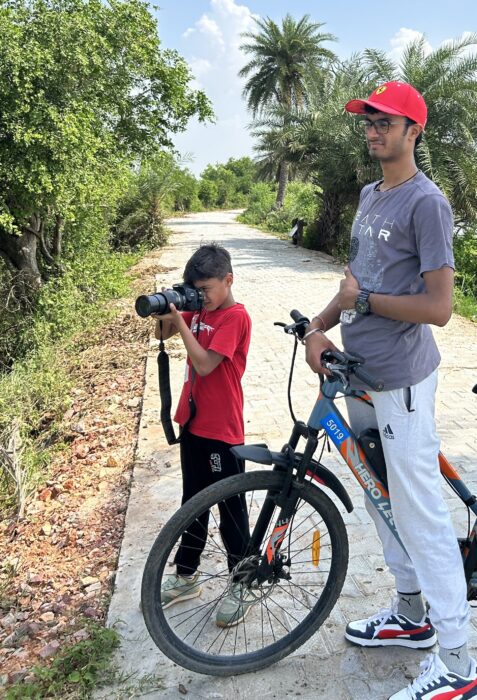
We all want to capture the magic of our travels. We want a visual record of the vibrant spice markets, the towering mountain peaks, and the quiet alleyways that made us fall in love with a new city.
But there is a dangerous trap in travel photography: spending so much time trying to get the perfect shot that you forget to actually experience the place you are visiting. If your entire memory of a sunset is what it looked like through a two-inch screen, you missed the sunset.
You don’t need a heavy DSLR camera and thousands of dollars in lenses to take incredible photos. You just need your smartphone, a basic understanding of composition, and a commitment to staying present. Here is how to take stunning travel photos while keeping your head out of your screen.
- The Best Camera is the One You Already Have
Modern smartphones are incredibly powerful tools. Before you even think about buying a dedicated camera, master the one in your pocket.
Wipe your lens: It sounds painfully obvious, but 90% of blurry, glowing smartphone photos are just the result of a fingerprint on the lens. Wipe it on your shirt before you shoot.
Tap to expose: Don’t just point and shoot. Tap the screen on the subject you want to focus on, and use the little sun slider that appears to adjust the brightness before you take the photo. - Master the Rule of Thirds
The fastest way to elevate your photos from “snapshot” to “art” is to stop putting your subject dead center.
Imagine your screen is divided by two horizontal lines and two vertical lines, creating nine equal squares. (You can actually turn this grid on in your phone’s camera settings.
Place your subject—whether it is a person, a boat, or a towering cathedral spire—where those lines intersect. If you are shooting a landscape, place the horizon on the top or bottom third line, not right through the middle. This creates balance and visual interest. - Give Landscapes Scale
Have you ever taken a photo of a massive, sweeping mountain valley, only to look at the photo later and realize it looks completely flat and unimpressive?
Grand landscapes need context. To show how massive a canyon or a waterfall truly is, you need to include something in the frame of a known size.
Wait for a fellow hiker to walk into the lower corner of the frame, or include a tiny cabin in the distance. The human element instantly gives the viewer a sense of the sheer scale of the environment. - Chase the Light (The Golden Hour)
Photography is literally the capture of light. The middle of the day, when the sun is directly overhead, creates harsh shadows and washed-out colors.
The best time to take photos is during the “Golden Hour”—the hour just after sunrise and the hour just before sunset. The light is soft, warm, and hits your subjects at a beautiful, dramatic angle. Wake up early to catch the quiet morning light, and put the camera away during the harsh midday sun to actually explore. - The “One and Done” Rule
This is the most important rule for balancing photography and presence.
When you see something beautiful, take the camera out. Frame the shot. Take one or two photos. Then—and this is the crucial part—put the phone away. Do not stand there reviewing the photo, applying filters, or trying to capture the exact same angle 15 more times.
You got the shot. Now, take a deep breath, look at the view with your own eyes, and let yourself actually feel what it is like to be there. The photo will trigger the memory later, but you have to actually create the memory first.